

Hi! This is April’s Monthly Listening list, a quick rundown of new Japanese albums I checked out this month that I enjoyed. You can browse past Monthly Listenings here.
Everyone in Nemurubaka raves about Ruka (Yuna Taira) and her rock band PEAT MOTH. The small circle of people who’ve seen her perform regards her song “Nemurubaka” in particular as the best thing she’s ever written. Yet you don’t actually get to hear the song for a majority of the 2025 film. Someone briefly plays a live recording of it from their phone. Though, the most you can hear of this so-called masterpiece is from Ruka’s roommate Yumi (Shiori Kubo) humming the song from her memory.
What’s certain is that “Nemurubaka” sounds nothing like the music Ruka is making after signing with OT Records. A year after her roommate suddenly moves out, Yumi finds her blown up as solo singer A or Human with her breakout single, “Haruiro,” playing just about everywhere. A sparkling acoustic-guitar pop tune paired with sweetly hummed do-do-do’s, it’s a damn good take on stereotypical J-pop as fake movie songs go. For Yumi, the hit song has been inescapable as much as it has been easy to tune out as if it was wallpaper: she encounters the music video as an ad while she starts up a YouTube video, skipping past it once she’s able without thinking twice.
PEAT MOTH performs “Nounai Noise”
During Nemurubaka’s final moments, Yumi attends an A or Human concert after a guest ticket arrives in her mailbox. She looks on, dumbfounded, from the second floor of the concert hall. Her ex-roommate resembles nothing like the frontwoman of PEAT MOTH. She watches the band perform for perhaps the umpteenth time in the film’s first act. At that small club show, Ruka begins the set with a scrappy punk number, “Nounai Noise,” where she yowls like she’s YUKI from JUDY AND MARY. Wild, free, and vocal about her thoughts on life and rock music, this is the real Ruka as idolized by Yumi.
Is this what you left us for? Yumi shouts in frustration as she watches from above. It’s hard not to feel for her after watching the two bond as they get into dumb bullshit. The actual plot of Nemurubaka is as eventful as the lives of broke college roommates can get: feasting on conbini delicacies, drinking high-balls until they puke, getting hit on by skeevy coworkers and insensitive college boys. Once Ruka suddenly moves out, Yumi’s back at their same go-to bar but now to drink the same mega-sized high-ball alone.
This pivot by Ruka into A or Human also scans as her selling out from the perspective of Yumi. In between the silly hijinks of Nemurubaka are conversations, mostly engaged by Ruka, on pursuing art and music for a living: she bickers to Yumi about every amateur artist around her who’s self-satisfied by the prestige that comes from identifying themselves as an artist but too insecure to apply their work outside of their bubble. She tends to her passions as a given, and this kind of discipline understandably makes her impressionable to her circle of college students living aloof without a clue for what they want out of their lives. But after seeing her so dismissive about others who don’t follow through with their work, it’s almost a betrayal to see her now pursuing music that’s the complete opposite from her days in PEAT MOTH.
“Nemurubaka” by Yuna Taira as Ruka Kujirai
After the singer bows out her concert with “You more” — a synth-pop song that resembles Wednesday Campanella from its busy beats and word-drunk lyricism — A or Human grabs a guitar from the back stage for the encore. This move isn’t expected by the OT Records team, who senses something wrong is afoot. She then introduces the final song of the night, “Nemurubaka.”
The film finally lets you listen to this fabled masterpiece, and the wired punk song recalls for me the anthems performed by Kessoku Band to win the crowd in Shimokitazawa. The spiky, guitar-driven sound alone brings a breath of fresh air to the set after a series of generic pop. But Ruka seems to speak more candidly about herself through “Nemurubaka” than any other song. “Please pay off,” she repeatedly sighs as she sings about aimless conversations shared during pointless nights. At one point in the movie, she drop-kicks a friend-of-a-friend out of anger from him calling her out to be as insecure about her abilities as the amateurs she complains about. Though she acts cool and disciplined in front of everyone, the ennui in “Nemurubaka” suggests there’s some truth to that.
It remains unclear what exactly Yumi loves about “Nemurubaka,” enough to consider it Ruka’s best work. Maybe she relates to those lyrics about aimlessness. Maybe she’s attached to the melody that she helped write: “Nemurubaka” gets its title—Sleeping Idiot—from Ruka taking what would become the song’s main melody from something Yumi once hummed in her sleep. Or maybe it’s from the experiences she shared with Ruka as the singer wrote her favorite song. Everything rushes back as Ruka begins playing the final song of the night. Yumi still knows every word.
Nemurubaka was an OK watch. A quieter effort from Yugo Sakamoto, who I best associate with his Baby Assassin films. He just loves following the lives of a duo. Yumi and Ruka are no Mahiro (Akari Takaishi) and Chisato (Saori Izawa)—though, who can really compete with those two?—but their slice-of-life is similarly comedic. It’s nice that the songs from it are memorable, if not actually great.
No more fake movie songs below but we got a whole gang of great new music from real bands. Here are new releases we enjoyed during the month of April.

Split by 7th Jet Balloon & PLATFORM
► “Snowing day2” - 7th Jet Balloon | indie rock / emo
“7th Jet Balloon are eternal romantics, their young hearts always aching in the band’s racing emo-rock tunes. ‘Snowing day2,’ from the new split EP with fellow emo band PLATFORM, finds 7JB in that familiar predicament of heartbreak where a separation is almost too poetically timed with the changing seasons.” —Read more at scrmbl

adieu 5 EP by adieu
► “Blue hour” | pop
“The second song shared from Moka Kamishiraishi’s adieu 5 EP suggests a rather cliched turnout for a project whose music often bears its titular sorrow. But the thumping indie-rock of ‘blue hour’ fully revs its engines once our singer punctuates that scene-setting with a sensuous lyric. This new one from adieu is ruminative like her best while exploring feelings beyond the expected.” —Read more at scrmbl
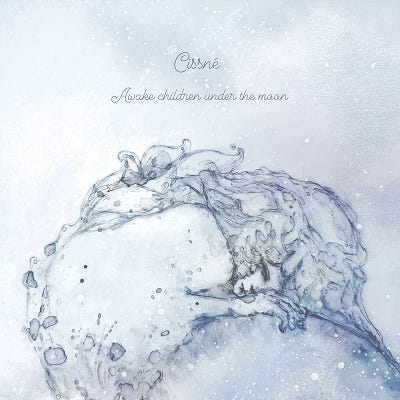
Awake children under the moon EP by Cissne
► “straysheep” | screamo
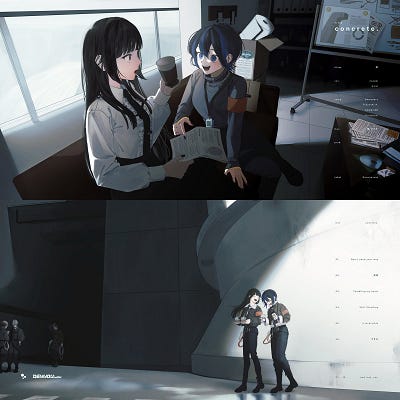
concrete. by Various artists / Dennou.wav
► “Don’t need your way” - nasaki & Pukuchi | electropop
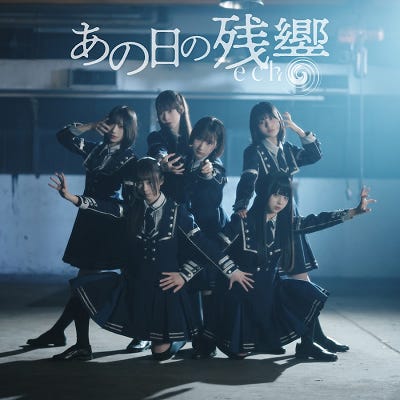
Anohi No Zankyo by HARUKA ECHO
► “Zankyo” | pop / idol
“‘Zankyo’ builds upon the musical palette but also the structure similar to anthems by Nogizaka46 or Keyakizaka46: shrouded in pensive atmosphere, a lone acoustic-guitar strum soon ushers in arena-EDM stomps and a dramatic string section to bring the point home. If there is a definite “Sakamichi-group sound,” HARUKA ECHO embodies it.” —Read more at scrmbl
Zoo by hoon
► “HEBITORA” | R&B

Timeless by Kohjiya
► “Tell Me How It Goes” | rap

New Era by MIKADO
► “New Era” | rap
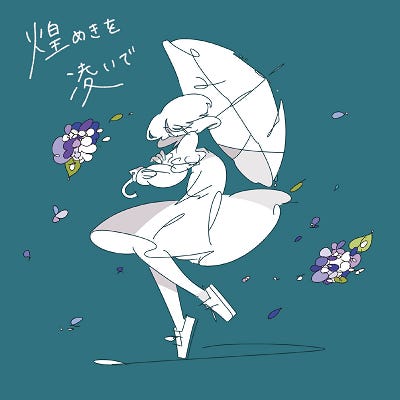
Kirameki Wo Shinoide by musbime
► “Ryuseigun No Ato” | indie rock

Tokyo’s Finest by NUMB
► “FOLLOW THE SHOGUN” | hardcore punk
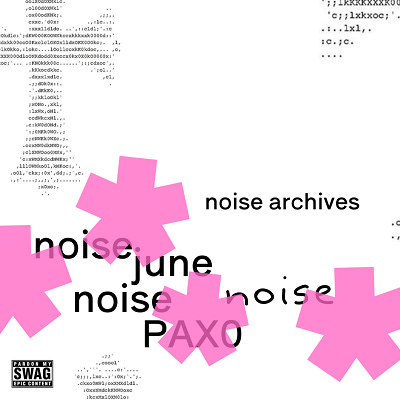
noise archives by PAX0 & june
► “upper” | rap / digicore

Crazy Japan 2 by rirugiliyangugili
► “Akimitaini” | rap

Hollow Me EP by Ru-a
► “Love Potion” | electropop
“A winking, casually vulgar energy defines the music of Ru-a, including her Hollow Me EP. As “Love Potion” fades in nightcore’d rave stabs reminiscent of Underworld’s ‘Dark & Long’—or more likely PinkPantheress’s ‘Tonight’—Ru-a flirts with her crush over the phone where she switches her persona between shy girl and playgirl to get exactly what she needs. She sings of her seven-day strategy with sure confidence, like it’s predetermined that they will fall right into her hands.” —Read more at scrmbl

Album 13 by Robounoishi
► “Mujikaku” | indie rock / Vocaloid

Maniac by TORIENA
► “KEYHOLDER” | EDM / hardcore
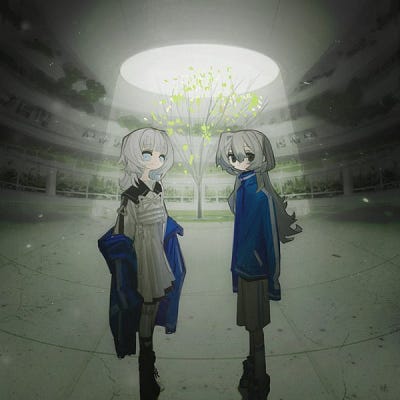
Escape to the Green by utumiyqcom & ukaihi
► “iru” ft. Hatsune Miku | electropop
Bonus Beats: Vivian Hsu - Japanese Selections
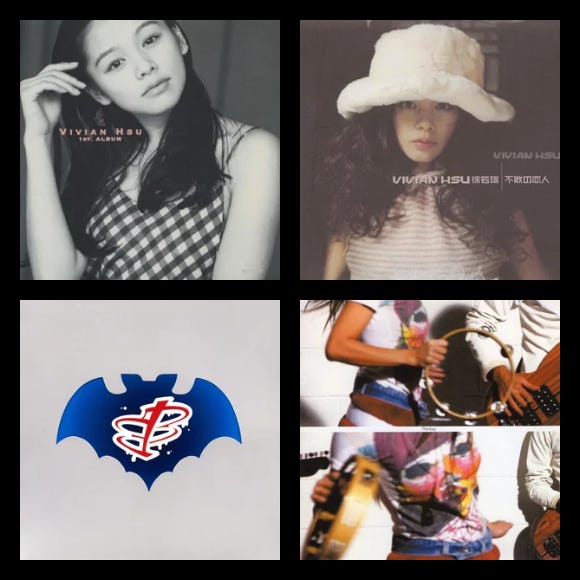
Vivian Hsu - Tenshi Xiang (1996)
Vivian Hsu - Fuhai No Koibito (2000)
Black Biscuits - LIFE (1999)
The d.e.p. - Chikyuu No Byouki -We are the d.e.p.- (2001)
Is this an idol album? It’s a question that I’ve posed with half-seriousness to dozens of old pop records this year so far, including the Japanese releases by Vivian Hsu. Titles like “singer,” “lyricist” or “actress” might come before “idol” from others to describe the Taiwanese talent, yet her come-up in Japan during the ‘90s mirror the paths of the country’s idols during her day. Hsu first gained attention in Japan through gravure, then released a few singles, and finally broke out as a variety-show talent. An all-encompassing title like idol best suits a multi-hyphenate like her.
Hsu is best known in Japan from her time in the TV program Ucchan Nacchan No Urinari during the late ‘90s, and she’s celebrated in particular from her part in Black Biscuits, a pop group formed with some of the show’s cast. Out of their string of hits, “Timing” will be their staple record for some time especially after TikTok reviving it 25 years after its initial popularity. That said, the best single to get a feel for BB’s sole album, Life, would be “Relax.” Arranged by Komorita Minoru, it doubles as a primer to the general sound of J-pop at the time: the jazzy liquid funk production echoes the arranger’s groovy swing heard in SMAP’s “Shake” and “Dynamite.” From the group’s variety-show origins to the album’s sound, Life is squarely a product of its time in the best way.
If Hsu’s Japanese solo debut, Tenshi Xiang, sounds out of its time in comparison to Black Biscuits upon first listen, it’s actually a sign it sounds exactly like J-pop in 1996. Though some hip-hop and house live on in the rhythms, the album is a nostalgic soul spinning old pop with modern touches. Take “100 Carat No Namida,” the most 1996-sounding song here, with its jangling guitars recalling My Little Lover and their throwback to Britpop classics. The overall vibe reminds me of an idol LP like Ryoko Hirosue’s from later in its decade. Rather than fashion Hsu as a dance-pop diva, an it girl of the times, Tenshi Xiang presents her closer to a familiar memory of an idol from a personal, not-so-distant past.
“Kuchibiru No Shinwa,” from Tenshi Xiang (1996)
Hsu mines from a recent pop past once again in Fuhai No Koibito. Formal pop ballads pad the track list more than her debut, but the rock influence equally sticks out from her second Japanese full-length. While “Ai Suru Inryoku” carries on the ‘60s pop-rock beat, the surf-y groove of “Ars Amatoria” predicts the more glam-inflected excursions with her short-lived band The d.e.p.
“I loved the music Vivian had put out in Taiwan. Some of the songs reminded me of Jane Birkin,” Masahide Sakuma said to BARKS in 2013. After pitching the idea of starting what would be the d.e.p. with Hsu, he called up Gota Yashiki for drums, Masami Tsuchiya for guitars and Mick Karn for bass, not thinking they’d all actually go along with it. A band with such a star-studded line-up of Japanese-British New Wave icons is a novelty in itself, and even more so when said band is fronted by a J-pop idol seemingly out of their orbit. Going from Black Biscuits to this, Hsu certainly made a head-turning move.
Following the nostalgic spirit of Hsu’s solo albums before it, Chikyu No Byoki We Are the d.e.p. similarly traces the rock roots of everyone involved. The expected new-wave jams appear here and there, like the jitterbug punk of “Chikyu No Iiko,” yet the d.e.p. reference more of the styles slightly before it. Whoever wanted a song from Hsu that imagines her fronting Sadistic Mika Band gets their fix in the album’s lead single “Mr. No Problem.” Though far more orthodox than, say, Tsuchiya’s Rice Music, let’s remember this was originally intended as a Hsu solo album. By that measure, the album is exciting as it is eclectic.
Hsu focused her activities outside of Japan as the 2000s went on. She released several more albums in Taiwan, a part of her discography that I’ve yet to explore, while starring in films from Taiwan, Hong Kong and China. From the press circuits during the Black Biscuits reunion, though, it seems the public remembers her most from her initial ‘90s run, for her music, certainly, but more overall as a personality, a celebrity, an idol.
This Side of Japan has a Ko-Fi as a tip jar if you want to show appreciation. A subscription to This Side of Japan is free, and you don’t have to pay money to access any published content. I appreciate any form of support, but if you want to, you can buy a Coffee to show thanks.
Next issue of This Side of Japan is out soon. You can check out previous issues of the newsletter here.
Need to contact? You can find me on Twitter or reach me at thissideofjapan@gmail.com