
Hi! Welcome to This Side of Japan, a newsletter on Japanese music, new and old. You can check out previous issues here.
Sara Minami makes her rapper debut in All Greens as Hidemi Boku, a high-school student by day and freestyle rapper Neuromancer at night. The street cypher with her circle of other amateur rappers is where she blows steam from her home and school life. Though she keeps this extracurricular separate from others almost like a secret identity, her cover is blown when classmate Mikiru (Natsuki Deguchi) spots her in the cypher. After getting into a little tiff, Hidemi ends up confronting her with a freestyle about all the ill she thinks of this popular girl in the same class.
As she got into her groove, Hidemi’s style as a rapper seemed rather familiar: heavy on internal rhymes, liberal on cadence breaks, fierce word choices that suggest a constant psychological war. The tics of her raps made a lot more sense when the end credits revealed the film’s music is handled by Zo Zhit of Dos Monos. On his own records, his verses maintain a free-associative feel as his diction grows dense and complex, and this sprawl and spontaneity is suiting for when recreating an actual freestyle for a fictional, aspiring rapper like Hidemi.
While Zo Zhit’s soundtrack for All Greens features wonky hip-hop and spacey electro not unlike instrumentals in an album by his group Dos Monos, it also features a rap song by Hidemi that’s essentially the film’s synopsis. Over a woozy boom-bap beat, she goes on about her and Mikiru’s dysfunctional families, their direction-less life, and how their days all became a lot more exciting after they crossed paths.
What she somehow doesn’t share in her verse is the very thing that shook up their life into something more thrilling. After Hidemi gets her hands on a bag of marijuana seeds, the two along with classmate Kan (Mizuki Yoshida) start up the student club All Greens where they grow weed in their campus greenhouse to sell in hopes to strike it rich. I wish All Greens gave the characters more time to goof around with this weed-dealing premise, maybe more in the vein of an American stoner movie, because things go south a little too soon. Their operation quickly starts to crumble, and their profits go poof from events outside of their control. Nihilism, the film really goes to remind, can only provide a temporary way out.
“All Greens” by Zo Zhit & Hidemi Boku
As a fan of rap music, I had more fun trying to get more of a glimpse into the rapper identity of Hidemi than following her crew’s drug-dealing scheme. One scene shows a quick flash of Kimidori and Buddha Brand CDs laid on her nightstand, yet she’s a modern kid who checks out instrumentals uploaded on SoundCloud. As her taste goes, based on her character as this deeply cynical high-school kid, it wouldn’t be a shock if she gravitated to the more cerebral corner of rap. Her own style already seems like a byproduct of it, never mind that her raps being written by a Dos Monos member.
But unfortunately, information on Hidemi’s influences runs scant throughout the film. All Greens provides no formal explanation of why Hidemi got into rapping nor does it explain the film’s own general fascination with rap. The lack of exposition, though, only makes it a more of a curious quirk that I wish didn’t go so under-explored. Though Hidemi’s freestyle circle provides her an outlet as well as friendships outside of her school and home, any other extracurricular could’ve done the same. Rap at best provides the film a specific setting for the scenario that sets off the whole drug-dealing storyline: the marijuana seeds are stolen from this beatmaker who meets up with Hidemi in hope to record a song only for him to attempt to drug her unconscious.
Toward the final act, Hidemi is threatened by that beatmaker to pay him back for the seeds or else. She returns what she owes but not before talking some shit. “I saw you at an event in Mito,” she tells him about his mix full of songs by dead rappers like 2Pac and Lil Peep. “Thinking back now, it was tasteless as hell. The worst.” The teen rapper then throws a lighter to burning down the greenhouse and the beatmaker with it. She’s left with no money, no score—back to square one. But she ends up getting the last laugh.
Japanese weed movies probably hit different than American ones when weed is far more criminalized in the former country than the latter. All Greens also had a rather ridiculous depiction of people being high which took me out from the movie a lot more than the whole weed-dealing thing. I figure there are better films centering on teens and twentysomethings who crave some spark in their directionless lives. Cool music, though!
Enough Letterboxd-core musings. There’s more new music down below as we cover more rap but also punk and twangy indie-rock which remind of an older era. We also talk about returning star Ayumi Hamasaki and the end of the 20th century.
Happy listening!
Album of the Week
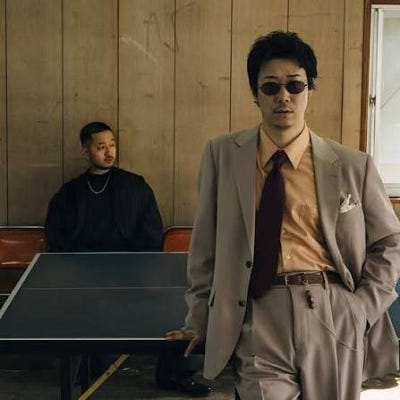
Icchola by Nariaki Obukuro & 5lack [TOKA]
*Recommended track: “Icchola” | Listen to the album on Spotify
A years-old draft of a beat sparked the sessions. Nariaki Obukuro and 5lack linked up before their joint live show “Gaia,” titled after their previous collaboration from 2019, in hopes to initially prepare an EP worth of new songs. The singer and rapper began by fleshing out a dusty, swinging boom-bap instrumental from Obukuro’s vault, cooking up in the end a neo-soul-meets-rap record that flexed with class. The resulting song, “Icchola,” eventually served as a leading track whose title — the best, show-stopping piece of garment in one’s wardrobe — hung over the duo’s whole project as a kind of mantra in keeping the balance of swag and suave in the music.
Several years separate Icchola from the two’s previous collaboration but also their respective intent. An outro of sorts to Obukuro’s sophomore album, 2019’s Piercing, “Gaia” aims for the cerebral with 5lack’s introspective raps playing against the singer’s cooed lyrics full of regret. But whereas the two together explored one’s mind haunted by past choices, this reunion deals more about the body with the album’s soulful grooves awakening hot desire and temptations from both.
For Icchola, Obukuro continues to scratch out the sparse, loose-limbed R&B previously heard in last year’s Zatto, where he delivered an impulsive, hip-hop-sourced soul carrying hints of D’Angelo’s Brown Sugar. Traces of the boom bap, like in the sax-squealing “Kagyo,” welcomes 5lack to import the old-school sensibility shown off in his most recent LP, Karibu. Yet he can’t help but feel the voodoo funk coursing underneath his partner’s snapping beats, shimmying his usually scattered rhymes along a far more groovy cadence. Obukuro meanwhile lends in gospel ad-libs as if to dutifully agree with his rapping collaborator about this infectious beat.
More than a fresh, laid-back flow, Obukuro’s lush soul inspires a rather unseen personality out of 5lack. As the rapper channels his train of thought directly onto wax as he wont to do, his verses are less preoccupied by rap-game politicking than women and the ways he could potentially win them over. He tries his best keeping cool by leveraging simping confessions with humble-brag bars while leaving the more straightforward sentiments to his singing partner in “Hot Damn.” His obsessions complements Obukuro’s production like nothing else from his own oeuvre as if it’s uniquely born out of their collaboration.
When 5lack does chime in on the rap game, it sours the music more than it sweetens it. He dedicates parts in the deconstructed G-funk of “Hotobori” criticizing hip-hop’s chase for TikTok buzz prevalent today in his eyes. Despite it being familiar meta commentary, it sounds overly didactic than it being a power move over such a casual groove. 5lack and Obukuro are convincingly boastful instead when they appear the most effortless in their flexes. The two gas themselves up in “Icchola” in their signature pieces. And when Obukuro show off his crisp outfit with his silky-smooth vocals, there’s no way he can be bothered to care about anything other than himself.
Singles Club
“Wake Up” by Arcadian Starship [DEBAUCH MOOD]
Since their first full-length, 2021’s Dedicated to Winslow Leach, Arcadian Starship shedded away the keyboards to hone in more on the riffs. More space for them to continue indulging in the rowdy guitar-hero glories that echo the ‘70s glam and American power-pop that were on their way to become punk proper. A sampler for the band’s new album, So Long, and Thanks for All the Fish, “Wake Up” riles up the start of yet another escapade with their scrappy punk riffs and hollering hooks: “Say you will / say you’re mine” is what I think I hear from all of the commotion. They sing it like they already know it will all fall into place.
So Long, and Thanks for All the Fish is out now. Listen to it on Bandcamp.
See also: “Time is Up” by HUDSON; “Captain Sensitive” by NERD DUDE
“XL (Remix)” by ISSUGI & GRADIS NICE ft. KID FRESINO [DOGEAR]
ISSUGI dusts off a highlight from his latest album, 2024’s Day’n’nite2, to bless it with a new verse from KID FRESINO. A golden soul sample looped by producer GRADIS NICE inspires the two rappers to dwell on their craft: “A rapper’s voice is XXXL / everyone can shine,” ISSUGI signs off in the chorus where he lays down the tenets of his vision of hip-hop. While the main bill waxes poetic in a measured flow, KID FRESINO’s verse remains labyrinthine as his mind runs double-time while thinking aloud about the same topic. His freewheeling style superbly expresses his mental shadowboxing as always, like he’s really connecting the dots via rhyme in real time.
Listen to it on Spotify.
See also: “concrete camo” by ralph ft. VERRY SMoL; “Tokyo Complex” by Zo Zhit
“Dear My Moment” by Yutai Communications ft. Nagakumo [NOTT]
Though Yutai Communications fascinated through their very now blend of the analog and the synthetic in last year’s Yawning Civilization, this new song—and perhaps the band’s upcoming new album, Wasurete—echoes a classic era far before the synthpop age. Joined by fellow indie-rockers Nagakumo, the two acts jaunt along off the back of a shuffling blues beat and a golden country twang like hipsters discovering a love for the 45. Through this timeless sound, they aim to capture the ephemeral at its most precious. “Don’t forget it! Don’t memorize it,” Yutai’s Paya and Nagakumo’s Saya Komono shout together in the chorus. “Entrust everything in it / like a song born just now!” While the vintage fade of the music hone in on the tenuousness, the sprightly melody of “Dear My Moment” lets indulging in the here-and-now sounds irresistible despite it all.
Wasurete is out September 9. Listen to the song on Spotify.
See also: “Kemono” by sono kangeki to kiroku; “michikusa” by Super Climbing Club
This Week in 1999…
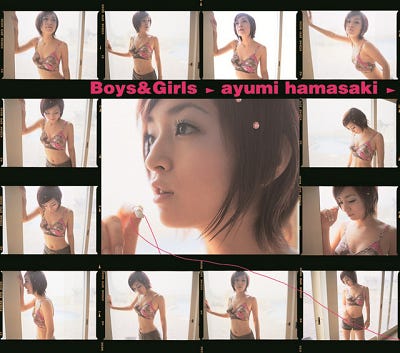
“Boys & Girls” by Ayumi Hamasaki [Avex Trax, 1999]
No. 1 during the weeks of Aug. 2 - Aug. 16, 1999 | Listen to it on YouTube/Spotify
Ayumi Hamasaki always had a lot on her mind, and she started off by keeping those thoughts close to her chest. From her debut album, 1998’s A Song for xx, her songs drew in devoted listeners through her candid introspection. “Why are you crying / why are you lost? / Why are you just standing still,” the then-teen pop singer begins the album’s title track, asking herself but also seemingly to those who happened to be listening in.
But her words seemed to call out to a crowd far larger than herself in her anthem unveiled for the last summer of the century, “Who can stop us / just starting to shine,” Ayu sings at the start of “Boys & Girls.” “Who has the right to stop them / just starting to flap their wings?” If its release date as well as her grand lyrics didn’t already do so, the amplifying, electronica-inspired beats pumping behind her suggested the near-arrival of a whole new era. The rising pop star seemed both willing and anxious to usher it in as a voice representing for the rest of the young generation who would soon define it.
Those futuristic beats had been in the works for about a year. As resonant as her lyrics were, the new-wave synth-funk and the post-new jack swing R&B of A Song for xx sounded dated in 1998, like a holdover from earlier in the decade when the pop of the ’80s began to fade in the rearview. After the album, Ayu turned to dance music of the times for inspiration, and the trance and drum ’n’ bass remixes of her songs pointed to what would come next. The pulse and build of the “dub’s trance remix” of “Hana” laid the ground work for her first electronica-led single, “WHATEVER,” while the raging big beat of the same song’s “D-Z DEADLY ROSE APPROACH” hinted at the stadium-scale club sound roaring in her records from 1999 and on.
Though as slick as the songs of A Song for xx in its synthetic finish, the production of “Boys & Girls” retooled those synths and beats in guidance of a different style cribbed from those remixes. The galloping keyboards recalled more rave stabs than new-wave chords as the kicks bounced with a four-on-the-floor club pulse. Electric guitars gave the anthem flair, but so did its drum-machine stutters and digital blips of trance arpeggios. If Ayu’s previous songs sounded contemporary almost to a fault, her production was now given a fresh coat of paint with textures that teased the incoming cybernetic Y2K.
This towering, hyper-current sound blasts behind the singer’s outcries about the uncertain present and “a bright tomorrow.” Despite the raised scale of her production, Ayu maintains an eye-to-eye perspective from where she writes her lyrics and addresses the second person. “Say it often / dream it often / talk about if often between the two of us / ‘I want to be happy’ / how many times has it been,” she casually ponders along to the gliding rave keys and pounding club beats. For a song that blares with so much volume, the singer contemplates out loud about familiar existential thoughts that other singers might reserve for a more personal space. The music might overwhelm, just like the evolving times in discussion, but she doesn’t lose “you,” her ever-present addressee, by her side at any point of the song.
Except, Ayu sounds far more equipped than any of us to face the changing times. Her lyrics read ambivalent on paper yet she sounds unwavering throughout the song as she wields her mighty vocals, like these anxieties are mere casual asides tossed off before stepping up to the stage. She navigates the beat with ease, landing every vocal turn in tandem to the swift rave keys. The electric guitars suit the track as the right pyrotechnics to accompany her brazen performance. When she sings about “the girls finding a brighter tomorrow” in the second chorus, it ultimately sounds not with an ellipses but a declaration that such a future is promised. Her steely confidence along these beats predictive of the next century’s sound echoed the opposite of a pre-millennium tension: a shining optimism for what was to come for teens just like her.
If “Boys & Girls” seemed grandiose in its gestures, Ayu’s star status quickly grew as if to match the ambitious scale of her music. By the release of her sophomore album Loveppears at the end of the year, she had become one of the biggest singers in the nation while shaping the fads and culture of the new millennium. Her production grew even more outrageous in scale but only to be properly leveled with the star at the center. Those same productions were built according to the trance- and techno-fueled core first patented in “Boys & Girls.” The more she became idolized, the more her fans heeded her lyrics like scripture. But even before the new century dawned, Ayu was already up for the task.
This Side of Japan has a Ko-Fi as a tip jar if you want to show appreciation. A subscription to This Side of Japan is free, and you don’t have to pay money to access any published content. I appreciate any form of support, but if you want to, you can buy a Coffee to show thanks.
Next issue of This Side of Japan is out September 2. You can check out previous issues of the newsletter here.
Need to contact? You can find me on Twitter or reach me at thissideofjapan@gmail.com